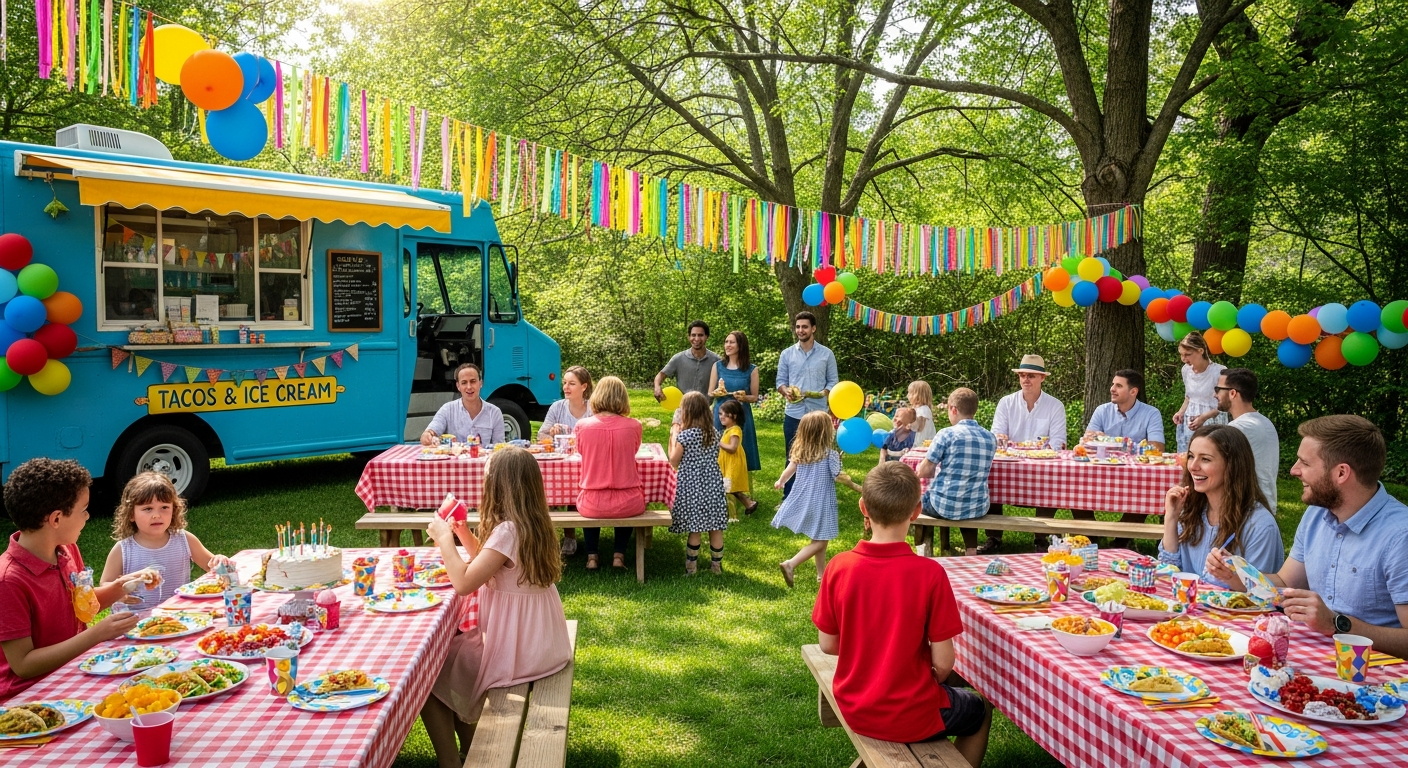
A food truck event is easier to manage when the host plans the site, service window, weather, and guest flow before the truck arrives. The operator is responsible for food preparation and service procedures, while the host can make the environment safer and make important information easier to communicate.
Use official food-safety guidance as your baseline
The FDA’s outdoor food-safety guidance explains why perishable food should not remain in the danger zone between 40°F and 140°F for too long. The FDA advises limiting that exposure to two hours, or one hour when outdoor temperatures are above 90°F.
The FDA Food Code is a model used to support safe retail and food-service practices. Local New Jersey authorities and the food truck’s operating procedures control the actual requirements for an event, but the FDA resources are useful for understanding why time and temperature planning matters.
Five things the host should plan
1. Give the truck a clean, practical setup area
Confirm a level parking or service area, safe vehicle access, room for guests to queue, and a location away from standing water, trash overflow, or obstacles. Ask the operator whether it needs access to power, water, shade, or a specific surface.
2. Plan the service window
Tell the operator when guests will arrive and when the main meal should be served. A long open-house window creates different planning needs than a short wedding dinner or school lunch period. Ask how the menu and ordering process should be communicated to guests.
3. Make handwashing and sanitation visible
Ask how the truck handles handwashing, utensils, surfaces, waste, and gray water. Keep the service area clear and provide a place for guests to dispose of trash. Do not place guest-facing food, drinks, or self-serve items where they can be easily contaminated.
4. Communicate allergies clearly
Tell the operator about known allergies before the event, not only when a guest reaches the window. Ask what ingredients are present, how the truck handles cross-contact questions, and whether a separate option is possible. Never promise that a menu item is allergen-free unless the operator confirms it.
5. Have a weather and leftovers plan
Heat, rain, wind, and delayed service can change the conditions around an outdoor event. Confirm where guests will wait, how the truck will protect food and equipment, and what happens if the event is delayed. Ask the operator how leftovers and food that has been served or held will be handled.
What to ask when you book
Include these questions in your event inquiry:
- What service window do you recommend for our guest count?
- Where should the truck park, and how much clearance is needed?
- What are the menu’s common allergens and dietary options?
- What weather conditions affect service?
- Who handles trash, wastewater, and cleanup?
- What should guests know about ordering and payment?
For New Jersey-specific approvals, review the NJ Department of Health Retail Food resources and contact the local health department for the event location.
Frequently asked questions
Does the host inspect the truck?
The host should ask for the documents and information required by the venue or local authority, but should not act as a substitute for an official inspection. Confirm responsibilities with the operator, venue, and local health department.
How long can food sit outside?
The FDA’s outdoor guidance uses two hours as a general limit for perishable food in the danger zone, reduced to one hour when temperatures exceed 90°F. Follow the operator’s procedures and applicable local requirements for the specific event.
Should I provide a tent for the truck?
Ask the operator first. A tent, shade structure, or guest shelter may help with weather, but it must not interfere with the truck’s equipment, ventilation, access, or fire-safety requirements.
Can the host guarantee allergen-free food?
No. Ask the operator about ingredients and cross-contact procedures, then communicate the answer accurately to guests. A host should never make a stronger safety promise than the operator can support.
Sources
- FDA: Handling Food Safely While Eating Outdoors
- FDA Food Code 2022
- New Jersey Department of Health Retail Food program
Frequently asked questions
Does the host inspect the truck?
The host should ask for documents required by the venue or local authority, but should not act as a substitute for an official inspection. Confirm responsibilities with the operator, venue, and local health department.
How long can food sit outside?
The FDA’s outdoor guidance uses two hours as a general limit for perishable food in the danger zone, reduced to one hour when temperatures exceed 90°F. Follow the operator’s procedures and applicable local requirements.
Should I provide a tent for the truck?
Ask the operator first. A tent or shade structure may help with weather, but it must not interfere with equipment, ventilation, access, or fire-safety requirements.
Can the host guarantee allergen-free food?
No. Ask the operator about ingredients and cross-contact procedures, then communicate the answer accurately to guests.