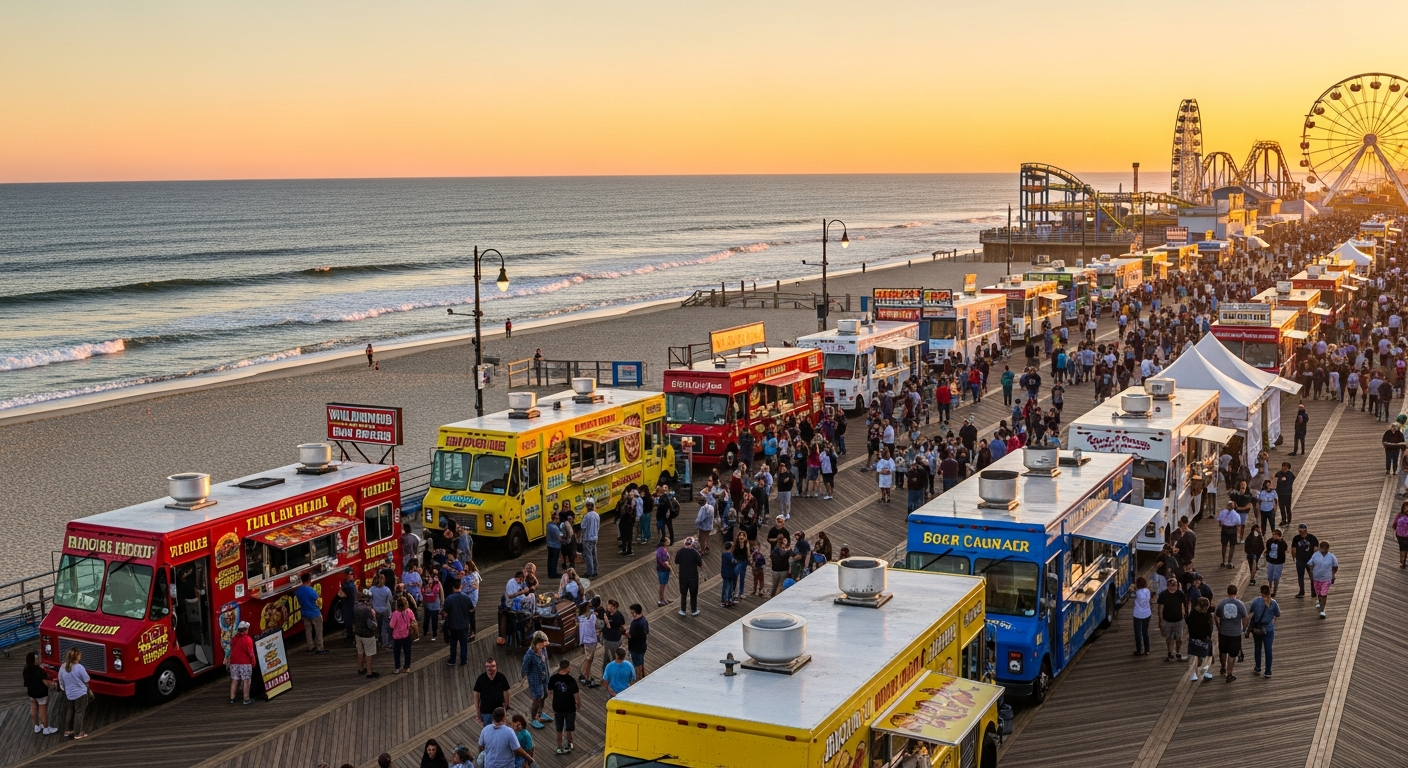
Waste planning is part of food truck event planning, not just a cleanup task after the last guest leaves. A useful plan tells vendors where waste goes, gives guests clear choices, protects walking routes, and makes the final handoff between the operator and venue unambiguous.
The New Jersey Department of Environmental Protection recycling resources include waste-reduction information, recycling materials, and links to municipal and county resources. NJDEP also maintains food-waste recycling guidance. Requirements depend on the generator, location, and volume, so confirm the rules that apply to your event.
Assign responsibilities before booking
Ask each truck what it brings, what it removes, and what the venue must provide. The conversation may include packaging, napkins, beverage containers, grease, wastewater, cardboard, prep scraps, and leftover food.
Put the answers in writing. A host should not assume that a truck will use the venue’s dumpster, and an operator should not assume the host will provide a specific recycling or wastewater setup.
Place bins where guests need them
Place trash and recycling near service and seating areas without narrowing the walking route. Use large, readable signs and keep openings matched to the waste being collected. If several trucks attend, use a coordinated waste station visible after eating.
Keep bins away from hot equipment, vehicle paths, accessible routes, and areas where wind can scatter packaging.
Separate food waste only when the plan supports it
Food-waste separation works when the event has the correct containers, staff instructions, pickup, and receiving facility. Do not label a bin compostable unless the venue and hauler can process the material.
NJDEP rules apply to certain large generators and other situations defined by the state. A typical private party may not fall into those thresholds, but the official guidance is useful for understanding why volume, location, and authorized facilities matter.
Confirm grease, wastewater, and cleanup
Ask the operator how it handles cooking oil, gray water, and liquid waste. Never allow grease or wastewater to enter a storm drain, lawn, flower bed, or ordinary trash container. Confirm the disposal plan with the operator and venue.
Assign cleanup checks after the meal period, before the truck departs, and after the venue is reset. Include responsibility for spills, windblown packaging, full bins, food scraps, cardboard, and damaged equipment.
Use the South Jersey event-planning guides for broader planning help, then browse the directory to ask operators about their waste procedures.
Frequently asked questions
Does every event need recycling bins?
Requirements depend on the venue, municipality, event type, and local rules. Ask the venue and local authority what applies, then provide a clear plan for guests and vendors.
Who handles grease and wastewater?
Confirm this directly with the operator and venue before booking. Put the responsibility and disposal location in writing, and never discharge waste into a storm drain or onto the property.
Can all food containers go in compost or recycling?
No. The correct stream depends on the material and receiving program. Check the venue’s and hauler’s accepted-material list.
Do New Jersey food-waste rules apply to a private party?
Not necessarily. NJDEP rules depend on factors such as generator size, projected volume, and location. Review the official NJDEP food-waste guidance and confirm event-specific questions.
Sources
Frequently asked questions
Does every event need recycling bins?
Requirements depend on the venue, municipality, event type, and local rules. Ask the venue and local authority what applies, then provide a clear plan for guests and vendors.
Who handles grease and wastewater?
Confirm this directly with the operator and venue before booking. Put the responsibility and disposal location in writing, and never discharge waste into a storm drain or onto the property.
Can all food containers go in compost or recycling?
No. The correct stream depends on the material and receiving program. Check the venue’s and hauler’s accepted-material list.
Do New Jersey food-waste rules apply to a private party?
Not necessarily. NJDEP rules depend on factors such as generator size, projected volume, and location. Review the official NJDEP food-waste guidance and confirm event-specific questions.