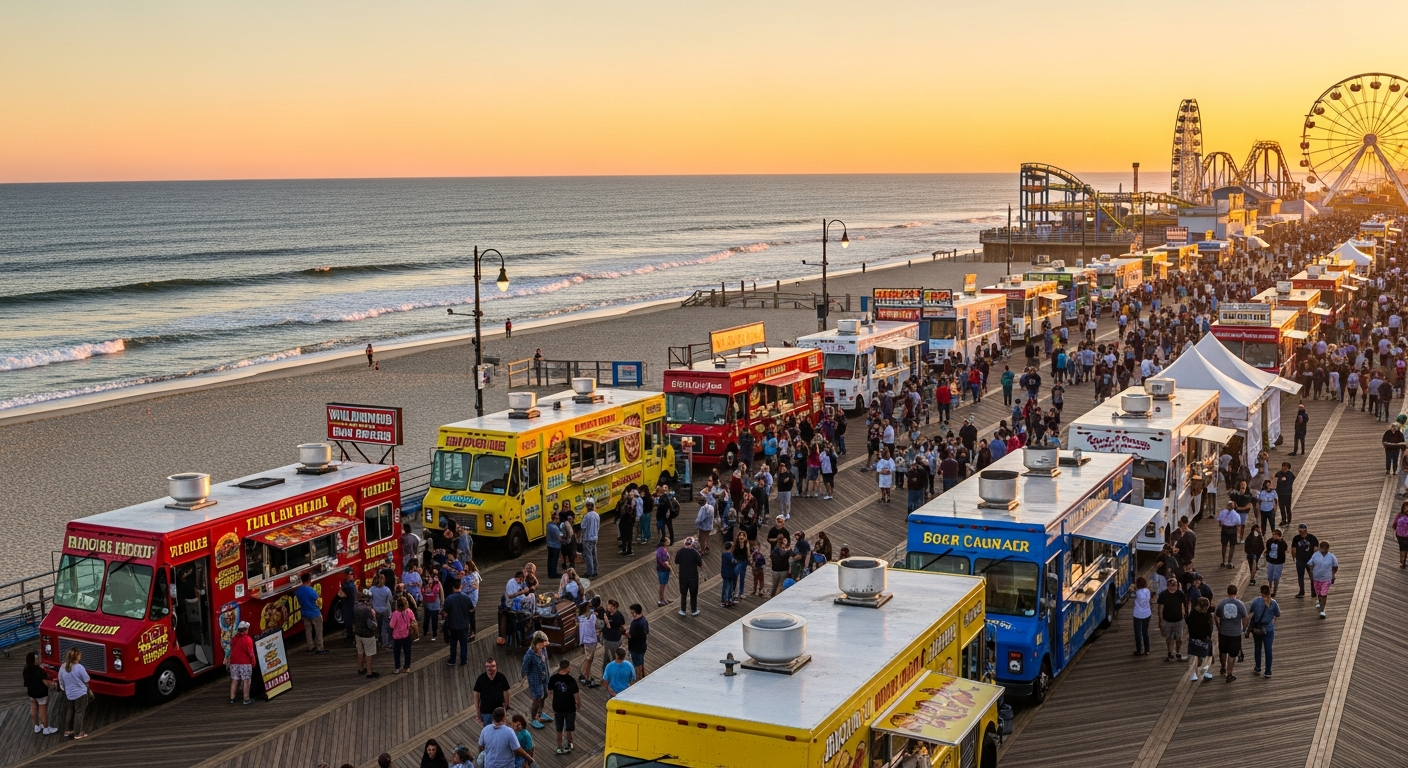
A food truck needs more than an open parking spot. The operator needs a safe arrival route, enough room to position the vehicle, a workable service window, and a plan for guests, utilities, waste, and weather. Good site planning reduces surprises for the host and the operator.
Start with a site map
Send the truck a simple map or marked-up photo before the event. Include the entrance, parking area, service location, nearby buildings, pedestrian paths, power sources, water access, dumpsters, and any low branches or overhead obstructions.
Ask the operator what vehicle length, turning radius, clearance, and surface conditions it needs. A location that works for a passenger car may not work for a truck, trailer, or generator setup. Keep a backup location in mind if the first area becomes unavailable.
Plan arrival and departure separately
The truck may need to arrive before guests, and it may not be able to leave immediately after service. Confirm arrival time, unloading, setup, service start, breakdown, and departure. Tell the venue, security staff, and event coordinator who is expected and when.
Do not block emergency access, accessible routes, fire lanes, loading areas, or neighboring businesses. If the truck will operate near a building, ask the venue and local authorities whether additional restrictions apply.
Treat power and fuel as planning questions
Ask whether the truck uses a generator, shore power, propane, or another setup. Confirm who provides power, where cords or fuel equipment can be placed, and what the venue allows. Do not run cords across walking paths or place equipment where guests can trip or contact hot surfaces.
The New Jersey Department of Community Affairs Fire Safety portal includes processes for food-truck business registration and temporary permits. Review the DCA Fire Safety portal and confirm the applicable requirements with the venue and local authority.
Design the guest line
Place the service window where guests can see the menu without blocking the entrance, restrooms, exits, or another vendor. Consider a queue lane, a pickup area, seating, shade, and a place for guests to dispose of packaging. If multiple trucks are attending, leave enough space for separate lines and clear signage.
Tell the operator whether the event has a fixed meal period or an open-house flow. A limited menu, preorder system, or staggered service may help, but those choices should come from a conversation with the operator rather than a generic promise.
Plan for weather and cleanup
Discuss rain, wind, heat, lightning, and a delayed start before signing the booking. Ask what conditions would pause service and who makes the call. Make sure guests have a safe waiting area and that food, equipment, and electrical connections can be protected without blocking access.
Confirm trash, recycling, grease, wastewater, and final cleanup responsibilities. New Jersey Department of Health retail-food resources are available through the NJDOH Retail Food program, and the applicable local health department can explain location-specific expectations.
A one-page site-plan checklist
Before event day, confirm:
- Truck or trailer dimensions and turning path
- Arrival, setup, service, breakdown, and departure times
- Parking surface, overhead clearance, and emergency access
- Power, generator, propane, water, and cord placement
- Guest queue, pickup, seating, shade, and accessible paths
- Menu signage, payment flow, and multiple-truck coordination
- Weather backup and service-pause plan
- Trash, wastewater, grease, and cleanup responsibilities
- Venue, municipal, health, and fire-safety contacts
For a local shortlist, browse the South Jersey food truck directory and use the county map to compare operators near your event area.
Frequently asked questions
How much parking space does a food truck need?
It depends on the truck or trailer, equipment, service window, and site. Ask the operator for vehicle dimensions, clearance, turning, and setup requirements instead of relying on a generic space estimate.
Can a truck use the venue’s electrical outlets?
Maybe, but never assume. Ask the operator what power it needs and have the venue confirm capacity, location, weather protection, and cord safety. Some trucks use their own generator or another approved setup.
Where should a truck be placed at a wedding or private party?
Choose a location that is visible and convenient for guests but does not block emergency access, accessible routes, exits, or other venue operations. Review the location with the venue and operator together.
Who is responsible for permits and fire-safety requirements?
Responsibilities vary by municipality, venue, and event type. Put them in writing and confirm the process with the local health department, municipality, venue, and operator.
Sources
- New Jersey DCA Fire Safety portal
- New Jersey Department of Health Retail Food program
- Food Service Guidance for New Jersey Temporary Food Vendors
Frequently asked questions
How much parking space does a food truck need?
It depends on the truck or trailer, equipment, service window, and site. Ask the operator for vehicle dimensions, clearance, turning, and setup requirements.
Can a truck use the venue’s electrical outlets?
Maybe, but never assume. Ask the operator what power it needs and have the venue confirm capacity, location, weather protection, and cord safety.
Where should a truck be placed at a wedding or private party?
Choose a location that is visible and convenient for guests but does not block emergency access, accessible routes, exits, or other venue operations.
Who is responsible for permits and fire-safety requirements?
Responsibilities vary by municipality, venue, and event type. Put them in writing and confirm the process with the local health department, municipality, venue, and operator.